GREENSBORO, N.C. (April 2026) — For two and a half days in April, the campus of Bennett College became something more than a place of study. It became a working studio, a classroom, a lab, and at times, a stage—where artists, educators, technologists, and students gathered to test what creativity looks like in an age shaped by artificial intelligence.
Held April 17–19, the AI Music & Creators Conference brought together industry practitioners, emerging creators, and national voices for a hands-on exploration of how technology is reshaping music, media, fashion, and storytelling. The weather outside was near perfect, but it was the energy inside the Global Learning Center that carried the weekend—curious, collaborative, and unmistakably forward-looking.
AI Music & Creators Conference: A New Era of Collaboration

“This conference helped open our eyes to an entire ecosystem,” said Dr. Teresa Hardee, CPA, LSSBB, Interim President of Bennett College. “I was thrilled by the level of engagement, the spirit of collaboration, and the willingness of everyone in the room to learn something new. This is the kind of work that moves us forward—and I’m looking forward to what comes next.”
“This conference started with a simple question: how do we approach creativity in a way that doesn’t fear the tools, but understands them?” said Phanalphie Rhue, Songwriter and Chief Global Communications & Experience Officer at Bennett College and Conference Convener. “We wanted to create space to talk honestly about AI—what it is, what it isn’t, and how it fits into the creative process.
At the same time, we wanted to ground that conversation in ownership. What does it mean to create with AI? Where does the human contribution begin and end? And how do creators protect, copyright, monetize, and commercialize what they make?
If we can answer those questions, then AI stops being a threat and becomes a tool—one that can expand capacity, especially for entrepreneurs and independent creators trying to do more with what they have.”
From its opening session—What Is AI? Understanding AI from the Ground Up, led by Scott A. McGregor, AI Strategist, Latimer AI—the conference set out to meet participants where they were, offering both entry points and deeper dives into the tools and questions shaping creative work today.
From Prompt to Production
At the center of the experience was hands-on creation. In sessions including Intro to AI Music and Suno, One Room, One Song: A Live Music-Making Session, and Prompt, Play, Produce: How AI Tools Are Rewriting the Creative Process, Lafouji Alexander, Suno VIP Beta Tester and Music Educator, and Omari Clarke, Multi-Platinum-certified Record Producer and Engineer, Suno VIP Member, guided participants through the mechanics—and the nuance—of AI-assisted music creation.
Participants didn’t just observe. They built. Together, they generated songs in real time, learning how prompts, structure, and creative intent shape output.
“I learned how to make AI work for us,” said Dr. John Henry Jr., Director of the Music Program, North Carolina A&T State University, who attended the entire conference. “You have to be specific—but when you are, the results can be powerful.”
Industry Insight and Cultural Context
Across the weekend, sessions grounded those tools in lived experience and industry practice.
In Built Different: We’re the Algorithm, Kameron Buckner, Lawyer and Founder, Social Docket, and Chenae Erkard, Tech Recruiter, Palo Alto Networks, explored entrepreneurship and building one’s own path.
Legal and ethical considerations took center stage in From Content to Contracts: Understanding the Legal Side of Creativity, led by Yemi Adegbonmire, Entertainment & Technology Attorney and Vice President of Legal and Associate General Counsel at Cineverse.
In Griot & Grits’ session, Open Source, AI, and Culture: Building Technology That Gives Back, Sherard Griffin, Board Chair, Griot & Grits, Ty McDuffie, Executive Director and Founder, Griot & Grits, Albert Myles, AI Strategist, Rickey Thomas Jr., Creative Executive Producer, and Thoan Freckleton, Music Producer, examined how technology can preserve and amplify Black stories.
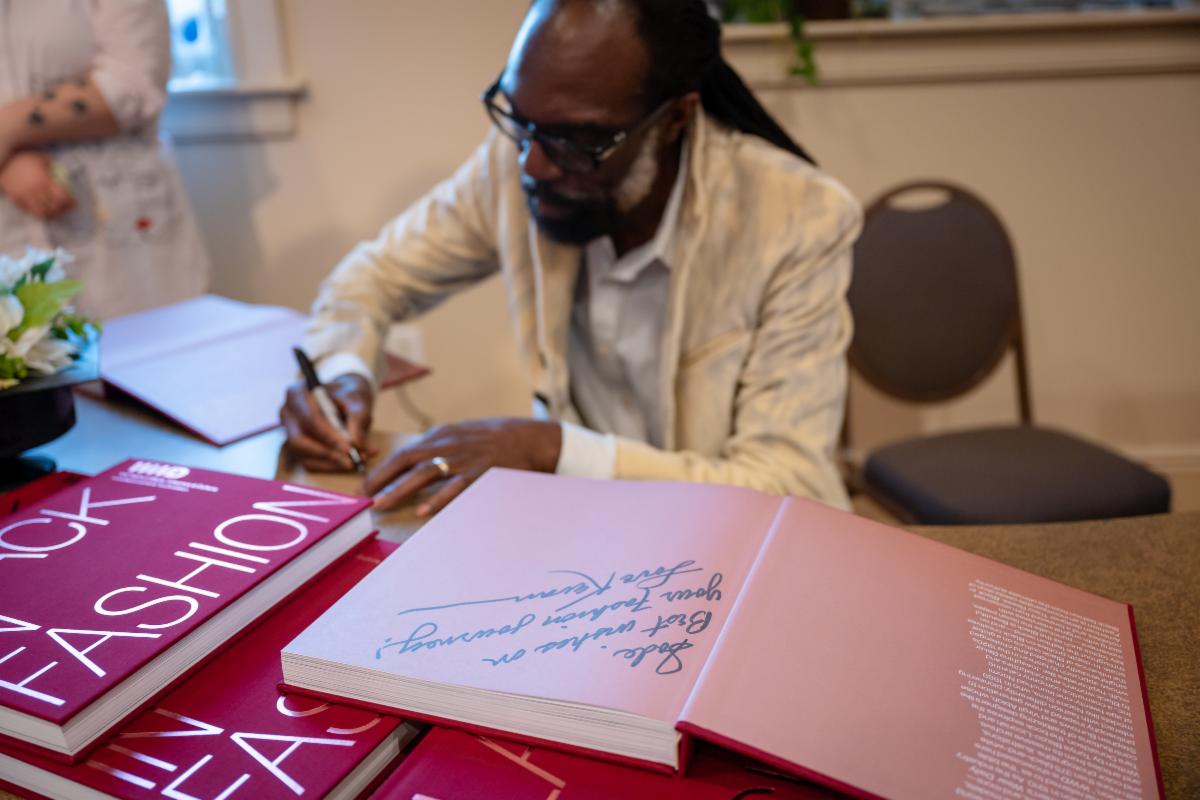
The conference also extended into fashion and design. In Pull Back the Curtain: Black in Fashion, Kevan Hall, Fashion Designer and President of the Black Design Collective, former designer for Halston, and TJ Walker, Co-Founder of Cross Colours and Co-Founder of the Black Design Collective, connected legacy, sustainability, and innovation. Their presence carried beyond the panel itself: mannequins throughout the space were adorned with gowns from Hall’s collection—including pieces worn by Vanessa L. Williams, Christina Ricci, and Taraji P. Henson—alongside UPCYCLE designs from the Black Design Collective, turning the venue into a living exhibition. The pair also announced interest in partnering with Bennett College around fashion design and sustainability.
Conversation, Connection, and Community
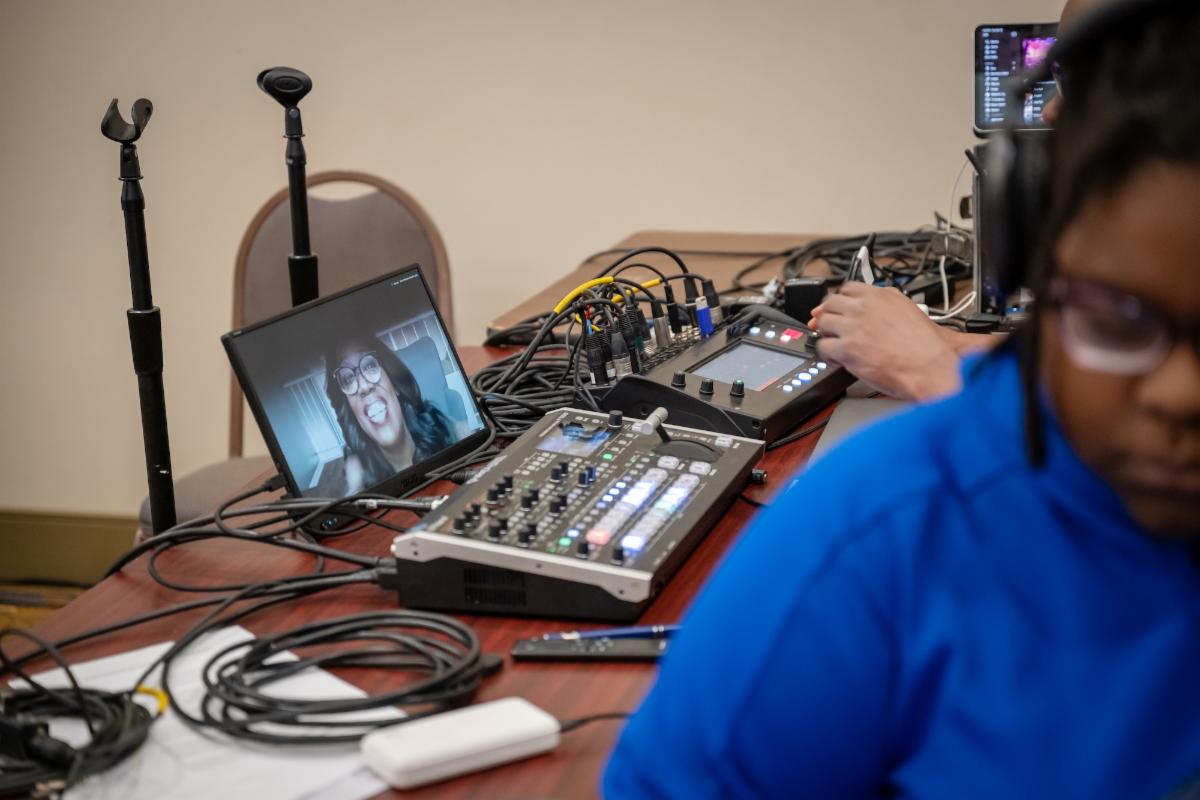
The conference balanced instruction with exchange. A virtual celebrity panel featuring Kevin Frazier, Television Host of Entertainment Tonight and Founder of HipHollywood.com, Loni Love, Television Host, Actress, Author, and former Electrical Engineer, Vanessa Estelle Williams, Award-winning Actress, Singer, Writer, Director, and Producer, and Alimi Ballard, Award-winning Actor and Producer, brought national perspective to conversations around creativity and branding.
Later sessions, including The Producer’s Ear: What Decades Behind the Boards Teach Us About Working with AI, featured Dr. William “Worm” Blount Jr., Producer, Co-Founder of Blackstreet, and Music Director, alongside Rickey Thomas Jr., Creative Producer and Filmmaker, Lafouji Alexander, and Omari Clarke, blending decades of industry experience with emerging technology.
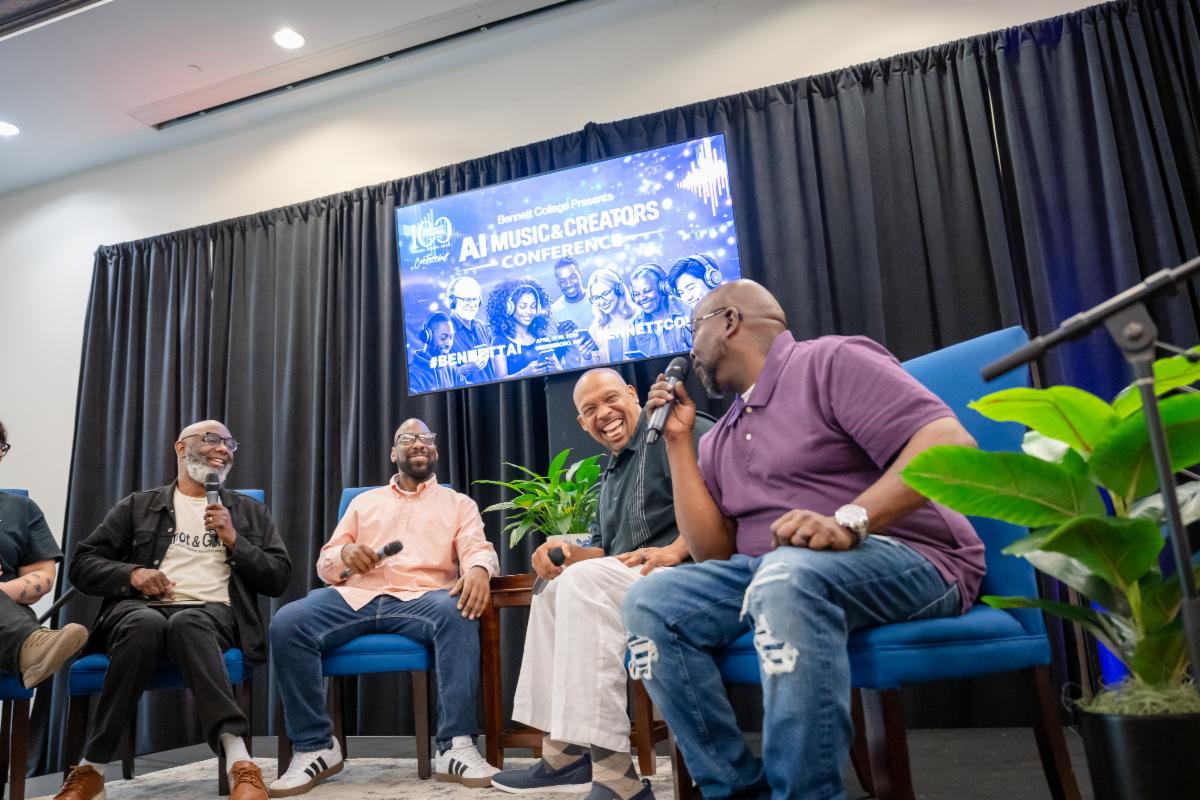
In Rooted in the Church: A Story in Creativity, Technology, and Faith, Rickey Thomas Jr., Matthew Williams, Multi-Instrumentalist, Producer, and Musical Director, Ty McDuffie, and Dr. William “Worm” Blount Jr. explored how faith traditions continue to shape creative expression in a digital era.
On the final day, Sheryl Underwood, Emmy Award-winning Television Host, Stand-Up Comedian, Producer, and Philanthropist, joined as a virtual guest for Human First: Mental Health & AI, grounding the conversation in balance, burnout, and humanity in an increasingly digital landscape.
A Learning Environment, Reimagined
For attendees, the impact was immediate.
“I’ve learned so much,” said Valerie Jones, a Bennett alumna, creator, and founder of Spot TV. “Now I see how I can use AI to enhance what I already do—and even create opportunities for others.”
Dr. Stevii Mills, Creative and Educator, described the experience as both surprising and energizing. “I didn’t know how to take sounds and create something like that,” she said. “Now I’m ready to take it to the next level.”
For industry veterans, the shift was just as tangible.
“This conference shifted how I think about AI in music. I’m a musician. I’ve spent my career working with producers and artists at the highest level, and what I saw here made it real,” said Dr. William “Worm” Blount Jr. “If I hadn’t come to this conference, I probably wouldn’t have leaned in the way I did. But now I see it differently. The next generation is going to pick it up quickly.”
Music Showcase and Recognition
The weekend culminated in a live Music Showcase, where selected submissions were shared with industry professionals.
First Place: Faith Previlong ’26
Second Place: Briana Newball
Third Place: Scottie Arant
The College also recognized and celebrated all participating artists whose work contributed to the showcase.
Support and Partnership
The conference was made possible through the support of its sponsors and partners: Suno, Black Design Collective, Griot & Grits, J3 Consulting, LLC, The Beale Agency, RHULL Music, Arrowhead Graphics, Carey Sound, Skyrocket Communications, Southern Style Catering, and Mass Appeal PR.
Looking Ahead
What emerged over the course of the weekend was less a conclusion than a starting point. The conference created new points of entry, new collaborations, and a new way of thinking about creative work.
“This has been exactly what we needed,” said Lisa Pittman Dennis. “I hope there will be another conference next year.”
At Bennett College, the stage has been set—and the work is just beginning.